Saudi coffee is not one customer type split between tradition and specialty. One person can move between different coffees for different jobs throughout the day
This edition brings the original consumer study together with selected newer academic signals and public coffee conversations. The figures are attributed; the interpretations are labelled; and the proposed personas are not presented as measured market clusters

01 / READ THE DATA
Read the answer, not just the percentage
The survey used agreement scales. “36% in cafés” means respondents selecting the highest agreement category for that statement—not the share of all coffee consumed in cafés. Switch the reading below to see why this matters
Selected the highest agreement category (5/5). Multiple statements could be selected
Source: Alnafissa et al. (2024), n=1,055. Non-probability snowball sample; not nationally representative DOI
02 / THE LANDSCAPE · PDF P.03
A fast-growing market. Not one reliable market-size number
The original report compares sharply divergent 2025–26 market estimates of USD 1.4–5 billion. These estimates do not necessarily measure the same parts of the coffee economy, so they should not be averaged, added or presented as a forecast. The industry signals below describe distinct measures: daily cups, branded outlets and business licences
61,000 café licences, including 27,000 traditional-category licences, were separately reported in 2025. Licences are not equivalent to active branded café locations. The market-size range is contextual only—not a headline to use in an investor deck without independent verification
03 / CULTURE AND RITUAL · PDF P.04
The cup is also a social gesture
Saudi coffee operates as hospitality, welcome and continuity. The dallah and finjan are part of everyday hosting language—not merely heritage props. The Ministry of Culture named 2022 the Year of Saudi Coffee. At the same time, modern cafés have their own role in lifestyle, work and social identity. Traditional and specialty consumption can coexist in one household and even one day
An occasion can activate a different coffee need without changing the customer’s identity. That is why behavior-led segmentation is more useful than a simple traditional/modern split
Cultural reading from report p.04; interpretive framing, not a measured segment size
04 / COFFEE REPERTOIRE · PDF P.05
Half the sample drinks both
The strongest argument against rigid coffee-type personas is the study’s own repertoire distribution. Respondents reported drinking Saudi coffee only, other coffee types only, or both. A person in the “both” group can have multiple needs that a single beverage-label segment cannot explain
Frequency: 76% said they drink coffee at least daily; 61% gave the top agreement response to treating coffee as a daily routine. Those are different survey statements and should not be merged
Interpretation: Build for the switching moment—hosting, concentration, recreation, experimentation—not only the bean category
Source: Alnafissa et al. (2024), n=1,055, snowball sample. Distribution of respondents, not the national market
05 / DECISION DRIVERS
Taste is the headline. Price is the question
Respondents gave taste and quality stronger top-box ratings than low prices or bean origin. This is an importance measure, not proof that buyers are insensitive to price
Top agreement for each attribute; rounded shares from the published study tables
06 / SPENDING
What weekly coffee budgets reveal
Spend distribution was available in the original academic table, even though the first PDF edition did not chart it. More frequent consumption and wider repertoire were associated with higher spending in the study
Share of respondents by self-reported weekly coffee spend; NOT national average spend
07 / JOBS TO BE DONE
One consumer. Five different reasons
Select a moment to explore its likely job-to-be-done, trigger and business implication. These are researcher hypotheses, not surveyed occasion market shares

Give me a reliable cup, without reconsidering my choice every morning
08 / HOME BREWING · PDF P.08
The kitchen is part of the coffee economy
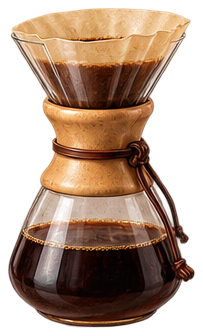
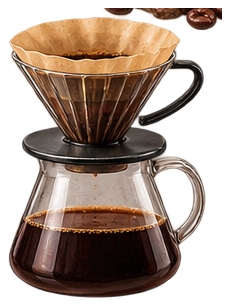
Home preparation cuts across Saudi coffee and other brewing styles. The original survey reported ownership of Saudi coffee equipment and equipment for other coffee types. This indicates that shoppers may need beans, tools, filters and guidance together—but equipment ownership alone is not evidence that subscriptions will sell
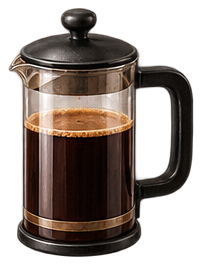
Practical need: A first-time brewer wants compatibility and instructions; an experienced brewer wants roast-date, grind and origin detail. They should not get identical product pages
Commercial hypothesis: Starter kits, brew guides and refill reminders are worth testing, but the study does not measure their conversion or repeat-purchase lift
09 / CAFÉ CULTURE · PDF P.09
Visibility is not the same as consumption share
The 2025 branded café expansion figure is a supply-side count. Separately, 36.21% of survey participants gave the strongest agreement response to drinking coffee at cafés or restaurants; the combined top-two agreement share was 55.83%. Neither figure represents the share of cups consumed in cafés
Branded coffee shop outlets reported for 2025
Highest agreement with drinking coffee at cafés/restaurants
A 2026 ethnographic study adds a different kind of evidence: approximately 600 hours of observation across 123 cafés in seven Saudi cities explored how ordering, seating, photographing and sharing participate in social identity. This explains visible café behavior, not how often all Saudis visit
2026 ethnographic study · Alnafissa 2024
10 / SPECIALTY AND EXPERTISE · PDF P.10
Not everybody wants an origin lecture
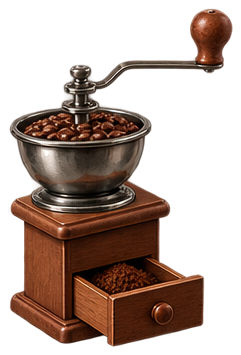
The original report frames expertise as a spectrum: beginner, mainstream, explorer and enthusiast. These are editorial levels—not measured population percentages. Only 30% of the study sample selected the strongest agreement response about awareness of new coffee trends. Complex tasting notes can reassure an enthusiast while frustrating someone who simply wants a dependable cup
What should I choose?
Will this taste good?
What is different?
How was it grown and processed?
Expertise spectrum is interpretive; 30% is a specific survey item, not the population share of enthusiasts
11 / DISCOVERY AND SOCIAL INFLUENCE · PDF P.12
Discovery is visible. Habit is persistent
About 33% of participants gave the top agreement response that social media influences their coffee choices. Trend awareness reached about 30%. Those findings do not mean the remaining consumers never use social media; they show that strongly self-reported influence and trend awareness are not universal
Seeks new cafés, limited roasts, shared experiences and peer validation. Content should give a credible reason to try
Wants reliability, easy replenishment and consistent sensory quality. Content should reduce uncertainty and effort
A 2025 study of 412 Saudi Gen Z coffee-brand followers found associations between social-media marketing activity and brand preference/loyalty. This audience-specific relationship is not evidence that any particular post format will cause repeat purchases
12 / LOCAL PROVENANCE · PDF P.13
An investment story is not yet a demand forecast
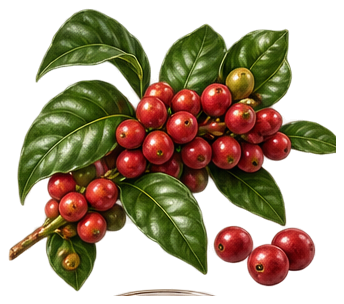
Saudi-grown Khawlani coffee carries real cultural and supply-side momentum. PIF announced SAR 1.2 billion of planned investment over ten years, a target to plant five million trees by 2030, and a production-capacity goal of 300 to 2,500 tonnes per year. These are announced investment and capacity targets—not achieved consumer-demand or willingness-to-pay figures
OPPORTUNITY / NOT PROVEN DEMANDTest whether provenance, grower stories and traceability increase engagement or willingness to pay among specific audiences. Do not create a “local coffee buyer” share without direct coffee-specific demand data
PIF official statement / 2022 · PIF / 2023
13 / SEGMENTATION LOGIC · PDF P.14
Nine axes. More useful than nine demographics
The report proposes segmenting first by behavioral context, then describing each segment with demographic characteristics where appropriate. These axes are a strategic framework rather than nine statistically tested factors
Morning · Work · Hosting · Gifting
Focus · Relaxation · Connection
Occasional · Daily · Heavy
Saudi · Espresso · Filter · Pods
Beginner · Explorer · Enthusiast
Everyday value · Premium occasions
Café · Store · E-commerce · Delivery
Takeaway · Social · Study
Heritage · Hospitality · Craft
Strategic segmentation axes as proposed in the PDF, p.14. Neither prevalence nor mutual exclusivity is assumed
14 / BEHAVIORAL LANDSCAPE
Seven archetypes. Not seven fixed people
The map below is a conceptual tool built from occasion and motivation patterns. Points are not calculated clusters and do not represent the prevalence of each persona
The same good cup, without a new decision
Reorder, replenish and stay in stock
15 / SEVEN BEHAVIORAL DOSSIERS · PDF PP.16–22
Seven possible jobs, seven different buying journeys
These profiles are synthesized by combining the research findings with plausible purchase triggers and channels. They are working hypotheses for brand research, not quantified population segments. Expand each dossier to explore the proposed job, friction and opportunity
01Daily RitualistConsistency and restocking+
A good cup without reconsidering the choice every day
Out-of-stock favorites, complicated repeat orders
Repeat purchase, replenishment prompts, frictionless reordering
02Productivity DrinkerConvenient momentum+
A cup that fits a work or study session
Too many steps, unclear preparation time
Fast checkout, quick preparation guides, workplace formats
03Social Café ExplorerSharing and novelty+
A café moment worth telling friends about
Unclear atmosphere, distance or no credible reviews
Authentic UGC, store information, new-drop storytelling
04Craft EnthusiastMastery and discovery+
Details that make the next brew more deliberate
Missing roast date, origin, tasting descriptors
Detailed PDP, brewing ratio and grind guidance
05Home BrewerControl at home+
A satisfying cup brewed without guesswork
Equipment incompatibility and uncertain technique
Compatibility guides and beginner bundles
06Hospitality KeeperConfidence when hosting+

Be ready to welcome family and guests
Unclear quantities, authenticity and consistency
Hosting size guides, seasonal kits and reassurance
07Quality-Convenience SeekerReliable and simple+
A quality cup with minimal effort
Too many options or unnecessary technical jargon
Simplified taste finder and accessible preparation formats
Persona features are strategy hypotheses, not estimates of segment size, conversion rate or buying intention
16 / CUSTOMER JOURNEY · PDF P.23
Seven stages where different questions appear
The report maps a conceptual seven-stage journey. It is a diagnostic lens to investigate a real customer experience—not a measured funnel with estimated drop-off rates
Commodity perception
Fragmented information
Unclear taste and freshness
Channel and checkout friction
Complex preparation or inconsistent quality
Stockouts and reorder effort
No notable reason to share
17 / OPPORTUNITY LANDSCAPE · PDF PP.24–25
From evidence to opportunities—without pretending they are proven
The report ranks directions by the strength of their underlying behavioral evidence, not by expected ROI. These should inform discovery work and experimentation—not serve as ready-made promises of growth
Explore equipment-compatible bundles and guides
Explain taste without jargon; reduce first-choice uncertainty
Test capsules and fast replenishment where product economics fit
Validate gifting volume and margins before rollout
Test origin storytelling against a neutral product explanation
Test timely replenishment, not automatic subscription assumptions
19 / SOURCE AUDIT
Where the evidence stops
A finding directly supported by a cited study or official document
An interpretation connecting multiple supported signals
An illustrative trend, public thread, or limited observational sample
A proposed commercial response that has not been validated by an experiment
Sample caution: the Alnafissa et al. study used snowball sampling with demographic skew. These figures cannot be generalized to every Saudi coffee consumer. The 2026 edition combines evidence from different years and does not imply all data was collected in 2026
Alnafissa et al.: online non-probability sample, n=1,055; stated agreement, repertoire, equipment and reported spending. Strong for describing this sample, not for nationwide projection
PIF/ Saudi Coffee Company investment targets and World Coffee Portal outlet counts describe supply, not household demand. Conflicting market values are reported as a range only
Ethnographic café observations and selected public discussions contextualize social behavior. Neither constitutes representative social listening across platforms
18 / PUBLIC CONVERSATIONS
What people debate when they talk coffee
Illustrative public social listening signals—not a platform-wide sentiment audit. None of the threads below is a representative sample of Saudi consumers
Is a V60 cup worth SAR 24–26? Consumers disagree over skill, ingredient quality and café economics
VIEW DISCUSSIONThe savings from brewing at home compete with preparation time and equipment effort
VIEW DISCUSSIONTime-limited café seating creates a trade-off between guest comfort and table availability
VIEW DISCUSSION